Trying to decide between a true lakefront home and a lake-access property in Wayne County? You are not alone. Many second-home buyers around Lake Wallenpaupack and nearby lakes weigh privacy, dock rights, and price against the convenience and value of shared access. In this guide, you will learn the key differences, what drives price, and how to verify rights so you can buy with confidence. Let’s dive in.
Lakefront vs lake-access: what it means
What is lakefront
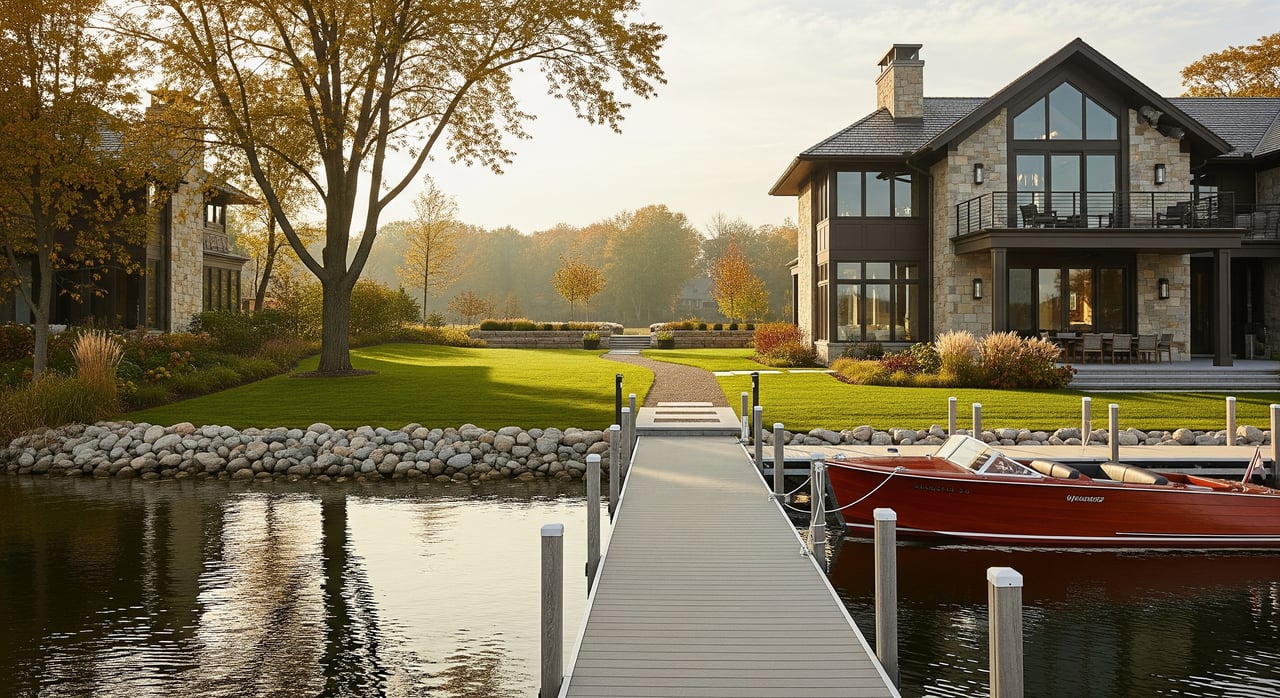
A lakefront property has private, direct frontage on the water. Your lawn or lot meets the shoreline, and you can reach the water without crossing another parcel. Owners typically hold fee simple ownership to the high-water mark and may have riparian rights that allow limited use of the adjoining water, subject to lake and government rules.
What is lake-access
A lake-access home does not touch the lake but gives you a way to use it. Access can come through a deeded easement, a neighborhood beach, a community dock, or membership in an association. The quality of that access varies. Some owners enjoy a reserved slip. Others use shared beaches or wait for slip assignments.
Rights and transferability
Direct lakefront usually provides the most certain access, but your actual rights depend on recorded documents and lake-wide rules. Deeded access and recorded riparian rights generally transfer with the property. Informal or permissive access can be changed or revoked, which makes it less reliable for long-term plans.
Use rules to expect
Wayne County lakes, including large managed reservoirs like Lake Wallenpaupack, follow rules set by the lake owner or operator, local townships, and state agencies. These cover docks, boat motors, and shoreline structures. Always confirm current rules before you assume you can add or expand a dock, build a lakeside deck, or beach a boat.
How these choices affect price
Why premiums vary in Wayne County
There is no one-size premium for lakefront here. Prices swing with buyer demand, the specific lake, lot size, water clarity, shoreline slope, and whether dock rights are private or shared. In amenity-driven parts of Wayne County, true lakefront often commands a higher price per square foot than inland or lake-access homes, but the size of that premium is local and property specific.
Simple ways to estimate premium
- Per-front-foot method: For lakefront sales, divide the sale price by linear feet of frontage. Compare that to the price of similar homes without frontage. This isolates the value of shoreline.
- Comparable sales method: Compare recent sold prices for similar houses where the main difference is waterfront vs non-waterfront. Control for size, condition, and location.
- Premium as a delta: In the micro-market you like, compare the median sale price of lakefront homes with similar non-lakefront or lake-access homes. The difference is the local premium.
Work with a local agent who uses MLS and county records to build a clean set of comparable sales.
What pushes price up or down
- Quality of frontage: A gentle slope, solid views, and the ability to dock often increase value.
- Dock rights: A deeded private dock or a guaranteed slip is typically worth more than shared or wait-listed dockage.
- Water management: Stable levels and active management tend to boost demand.
- Access exclusivity: Private shoreline feels more exclusive than large community beaches shared by many owners.
- Risk and costs: Flood zones, insurance needs, septic limits, and erosion control requirements can trim value.
- Buyer mix: When second-home demand from nearby metros is strong, lakefront premiums often widen.
Docks, permits, and maintenance
Dock rights to confirm
Before you fall in love with a property based on a boat or dock vision, verify the paperwork. Ask if there is an existing dock and how it is held. It can be deeded, leased, or allowed through an association or lake operator. Check whether slips are assigned, transferable with the house, or wait-listed. Confirm size, orientation, and boat motor restrictions.
Request recorded documents like the deed, plat, covenants, HOA rules, and a title search that shows easements and dock rights.
Permits and oversight
Expect multiple layers of oversight. Your township and Wayne County address setbacks, impervious coverage, docks, and septic permits. Certain in-water work can require Pennsylvania state approvals, and the Pennsylvania Fish and Boat Commission sets boating rules. Floodplain projects can involve FEMA rules. Reservoirs such as Lake Wallenpaupack often have their own dock registration and seasonal water-level guidance through the lake management office.
Confirm current requirements with local offices before you plan any new dock, lift, or shoreline work.
Ongoing costs to plan for
- Dock services: Installation, seasonal removal, winterization, and repairs add up. Some owners also carry dock insurance.
- Shoreline care: Erosion control like rip-rap or naturalized buffers can require maintenance and may need environmental permits.
- Shared facilities: If your access is through an HOA, you may pay dues and share dock or beach maintenance.
- Liability: Docks and watercraft exposures often warrant additional liability coverage.
Community access and HOA rules
Types of shared access
- Deeded easement: A recorded right serving a defined number of homes. This is typically the most secure shared access.
- HOA access: Governed by recorded rules that set dues, parking, guest policies, and dock assignments.
- Informal access: Permission that can be changed or revoked. This is the least secure option.
What to review before buying
Study the governing documents for any association providing access. Look for dues, special assessment history, dock assignment policies, guest and parking rules, and any rental restrictions. Ask how many homes share the beach or launch, what peak season looks like, and whether parking is limited or permit-only.
Financing, insurance, and resale
Appraisals and loans
Waterfront appraisals rely on true waterfront comparables, which can be scarce. That can affect timing and loan approval. If you are buying a second home or considering short-term rentals, underwriting and down payment requirements can differ. Choose lenders who understand second-home and waterfront lending in Wayne County.
Flood risk and insurance
Check FEMA flood maps and any local floodplain designations. If part of the structure lies in a mapped flood zone, a lender may require flood insurance. Ask about homeowner and umbrella coverage for boat and dock exposures. In cold seasons, wind, ice movement, and water damage can impact premiums and maintenance schedules.
Taxes, rentals, and resale
Waterfront assessments can be higher due to land value. Review current tax records through the county assessor. Many lake communities regulate short-term rentals through HOA rules, township ordinances, or lake management policies. For resale, deeded frontage and transferable dock rights often draw the widest pool of buyers compared to informal access.
Step-by-step buyer checklist
- Confirm the property type. Is it truly lakefront, lake-view, or lake-access? Get the exact legal description.
- Review the deed and title. Verify recorded easements, riparian rights, and whether dock rights transfer.
- Order a survey. Map frontage lines, setbacks, encroachments, and shoreline markers.
- Read HOA documents. Review rules, dues, assessments, dock assignment policies, and guest or parking rules.
- Check permits and rules. Confirm township, county, state, and lake operator requirements for docks and shoreline work.
- Evaluate flood risk and insurance. Check maps, ask about claims history, and get quotes for home, flood, and liability coverage.
- Inspect septic and well. Test water, evaluate septic capacity, and consider shoreline erosion or invasive species concerns.
- Confirm dock feasibility and costs. Determine if a private dock is allowed, whether a slip is available, and the expected annual costs.
- Ask about seasonal water levels. Learn how water-level changes have affected docks and beaches in recent years.
- Analyze the market. Work with a Wayne County waterfront specialist to prepare a CMA comparing waterfront and non-waterfront sales in the same micro-market.
Choosing what fits your lifestyle
If you want maximum privacy, control, and your own dock, a true lakefront home delivers. You will likely pay more up front and take on more maintenance, but you get direct access and broader resale appeal. If you want lake time at a lower purchase price and do not mind shared facilities, a lake-access home can be a smart value play. The best choice depends on how you plan to use the property, your budget, and your appetite for upkeep.
When you are ready to compare specific homes around Lake Wallenpaupack or other Wayne County lakes, partner with a local advisor who knows the shoreline rules, micro-markets, and the paperwork that protects your rights. If you want a calm, client-first process with clear guidance at every step, reach out to Alyssa Sells the Poconos.
FAQs
What is the main difference between lakefront and lake-access homes in Wayne County
- Lakefront touches the shoreline and offers direct private access, while lake-access relies on a deeded easement or community facilities to reach the water.
How do dock rights typically work on Lake Wallenpaupack and other local lakes
- Dock rights can be private, community-based, or subject to wait lists, and all are controlled by recorded documents and lake operator or association rules.
How can I estimate the price premium for lakefront in Wayne County
- Use local comparable sales, a per-front-foot analysis of shoreline, and a side-by-side comparison of similar lakefront and non-lakefront homes in the same micro-market.
What permits might I need for a dock or shoreline work in Wayne County
- Expect township and county approvals, possible Pennsylvania state permits for in-water work, and compliance with lake operator rules and any floodplain requirements.
Do I need flood insurance for a lakefront home near Lake Wallenpaupack
- If any part of the structure lies in a mapped flood zone, lenders may require flood insurance, and many buyers add extra liability coverage for docks and boats.
What should I check in HOA documents for a lake-access home
- Review dues, special assessments, dock assignment or slip rules, guest and parking policies, and any rental restrictions that affect how you can use the property.