Dreaming about a cabin in Wayne County? It is easy to fall in love with a wooded parcel online, only to learn later that a recorded lot is not automatically buildable. If you want a place for weekend escapes, a future second home, or a simple cabin retreat, you need to look beyond the listing photos and ask the right questions early. This guide will walk you through the big checks that matter most before you buy. Let’s dive in.
Why cabin land in Wayne County needs extra homework
Wayne County is very much a parcel-by-parcel market. The county does not regulate zoning countywide, so whether you can build often depends on the specific township or borough where the land sits.
That means two nearby parcels can have very different rules and very different costs to develop. A deeded lot may look ready on paper, but soils, wetlands, floodplain issues, local ordinances, and access can still stop your plans.
Start with the municipality
One of the first things to know is that Wayne County does not have one countywide zoning ordinance. According to county guidance, 14 of the county’s 28 municipalities have adopted zoning ordinances, and 25 of 28 have their own subdivision and land development ordinances.
In some places, county rules may apply instead of local subdivision rules. In Dyberry Township, South Canaan Township, and Prompton Borough, the county SALDO applies.
Why this matters for your cabin plans
Before you picture the floor plan or the fire pit, confirm what the municipality allows. A cabin lot may have limits tied to lot size, setbacks, access, sewage, or subdivision history.
This is especially important if you are buying land now and planning to build later. County guidance is clear that buying raw land does not guarantee you will be able to build when you are ready.
Lot size is only part of the story
Buyers often focus on acreage first, but size alone does not tell you whether a parcel works. In the county SALDO area where no zoning exists, minimum standards for on-lot sewage and on-lot water include 43,560 square feet, 150 feet of average width, and 50 feet of street right-of-way frontage.
Even then, access still matters. The ordinance says lots must have direct access to a public or private street, or to a proposed street that meets ordinance standards.
Do not ignore frontage and access
A parcel can seem private and peaceful, but access may be the real challenge. If access is from a state road, PennDOT authorization and a highway occupancy permit are required.
If the lot connects to a local municipal street, local approval may be needed. That can affect your timeline, your costs, and whether the site is practical for a future cabin.
Private driveways can change the equation
In Wayne County, a common or private driveway is treated as access for one lot, not as a street. That sounds technical, but it can have a real effect on how the parcel can be used.
The county ordinance also notes that deed covenants may govern repair, upgrades, and maintenance. If your dream cabin sits at the end of a long shared drive, make sure you understand who maintains it, who pays for it, and what happens if the road needs work.
Septic can make or break the deal
For many cabin buyers, septic is the single biggest due diligence item. In most of Wayne County, private on-lot sewage systems are common, and county guidance says septic design depends on soil type and percolation rate.
A recorded lot does not prove the soils were tested or that the parcel is large enough for a sewage system. That is why buyers should ask for septic test results and speak with the municipal sewage enforcement officer before closing.
What to ask about septic
If you are considering raw land for a cabin, ask for:
- Any prior perc test results
- Any septic design history
- Soil reports, if available
- The name of the municipal sewage enforcement officer
- Confirmation of whether the lot was ever approved for on-lot sewage
This step can save you from buying a parcel that looks perfect but cannot support the type of cabin you want.
Water is a separate decision
Water and sewage are not the same issue. County guidance says most Wayne County residents rely on private on-lot wells, although community water may be available in some denser areas.
Pennsylvania does not regulate private wells, and there are no statewide construction or siting standards for private residential wells. That means the homeowner is responsible for protecting and maintaining the well.
Plan for testing and ongoing care
If a parcel has an existing well, or if you expect to drill one, testing matters. Pennsylvania’s health department recommends regular water quality testing for private wells, and new homebuyers may want to test a well before moving in.
The same guidance recommends annual testing for bacteria, nitrates, total dissolved solids, pH, and other suspected contaminants. For cabin buyers, this is part of the real cost of owning rural land.
Use soils as an early screening tool
Before you get too far into a land purchase, it helps to screen the parcel for likely soil limitations. The USDA NRCS Web Soil Survey is the official online tool for current soil data used in land-use decisions.
For cabin buyers, it can be a useful first look at drainage, soil limitations, and whether a parcel may support the kind of septic system you want. It is not a replacement for local review, but it can help you spot possible red flags early.
Check wetlands and floodplain issues early
Wayne County warns that a recorded parcel is not automatically buildable because wetlands and floodplain status can still limit development. This is one of those issues that can be easy to miss if you are focused only on price and privacy.
A beautiful low area near water or a heavily wooded section may come with constraints that affect where you can place a cabin, driveway, or septic system. That is why floodplain and wetland screening should be part of your file before closing.
Utilities may be more limited than you expect
Many cabin buyers assume they can add utilities later without much trouble. In Wayne County, utility availability varies by parcel.
County guidance says electric service depends on location, cell reception can be difficult because of the terrain, and garbage removal is usually handled by private haulers. Some areas may have community water, but many properties still rely on wells.
Build utility costs into your budget
A lower land price does not always mean a lower overall project cost. If power must be extended, if cell service is weak, or if road work is needed before construction can begin, your budget can change quickly.
When you compare parcels, try to compare the total path to a usable cabin site, not just the asking price.
Driveway, grading, and permits can add up
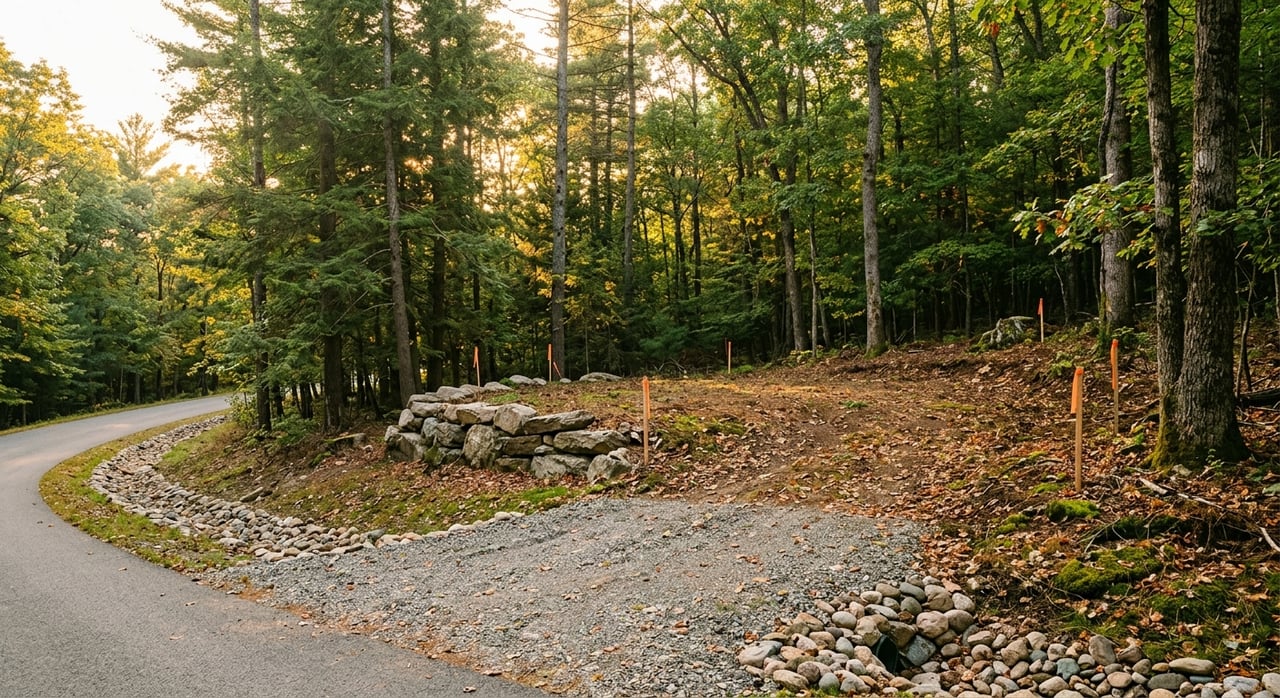
Road and driveway design is more than a construction detail in Wayne County. County rules address drainage, side ditches, culverts, and standards for safe access.
If your parcel needs clearing, grading, septic installation, or driveway work, permitting may also come into play. Wayne County notes that about 94% to over 95% of the county lies in Special Protection Watersheds or Special Protection Waters.
Why earth disturbance matters
Because so much of the county falls in these protected areas, most NPDES applications in Wayne County require an Individual Permit Application. The county also says an erosion and sediment control plan is likely needed for many earth-disturbance projects.
In non-special-protection areas, an erosion and sediment plan is required for disturbance over 5,000 square feet. For some smaller projects, anyone can prepare the plan, while projects over an acre of disturbance may require an engineer.
For you as a buyer, the takeaway is simple: site work is not a small line item. If the lot needs significant clearing or grading, that work should be investigated before you commit.
Documents worth collecting before closing
Wayne County recommends visiting the parcel in person and gathering evidence instead of relying only on an online listing. That advice is especially helpful for cabin land.
A solid due diligence file can help you understand whether the parcel fits your goals now and later. It also gives you a clearer picture of cost, risk, and timeline.
Your Wayne County cabin land checklist
Try to gather these items before closing:
- Survey
- Deed restrictions
- Septic test history
- Soil report
- Floodplain screening
- Wetland screening
- Utility availability or utility quotes
- Driveway access details
- Road maintenance agreement, if applicable
- Municipal contact information for zoning or permitting questions
Local professionals to contact before you buy
The right local contacts can make your due diligence much smoother. County guidance says the sewage enforcement officer reviews on-lot sewage feasibility and issues or revokes sewage permits.
The zoning or building permit officer enforces local zoning, inspects structures, and issues building permits and certificates of occupancy. The road master handles municipal road maintenance, and UCC enforcement may also be local depending on the municipality.
If the parcel will need a well
If you expect to drill a well, Pennsylvania law requires water-well drillers to be licensed. The state maintains a licensed driller database, although licensure alone does not guarantee construction quality.
It is still smart to ask about references and experience. For a cabin project, the quality of your local team often matters as much as the land itself.
A smart way to shop for cabin land
The best land buyers stay excited and practical at the same time. Wayne County can offer beautiful settings for a cabin, but the right parcel is the one that matches your goals, your budget, and the real-world limits of the site.
If you are comparing properties, focus on buildability first. Once you understand access, septic, water, permits, and local rules, you can move forward with a lot more confidence.
Buying land for a cabin should feel exciting, not overwhelming. If you want local guidance as you sort through Wayne County parcels and ask the right questions before you commit, Alyssa Sells the Poconos can help you navigate the process with care and clarity.
FAQs
Can you buy land now and build a cabin later in Wayne County?
- Not always. County guidance says a recorded parcel is not automatically buildable, and zoning, septic feasibility, wetlands, floodplain issues, and access can all affect whether you can build later.
How do you know if a Wayne County lot can support a septic system?
- Ask for soil and septic history and contact the municipal sewage enforcement officer before closing. A recorded lot does not prove the parcel is suitable for on-lot sewage.
Will a cabin lot in Wayne County usually need a well?
- Often, yes. County guidance says most residents rely on private on-lot wells, although some denser areas may have community water service.
Does driveway access matter when buying cabin land in Wayne County?
- Yes. Access can affect permits, costs, and even buildability. State-road access requires PennDOT authorization, and shared or private driveway maintenance should be reviewed carefully.
Are utility and site-work costs part of the land budget for a Wayne County cabin?
- Usually, yes. Electric service, driveway work, grading, erosion-control planning, and other site improvements can significantly change the total cost of making the land usable.